Quick Q and A with Jon Shain
In this interview Jon Shain goes into detail about the making of his latest CD, Ordinary Cats, geeky music tuning, strings, and musical modes, and, oh yeah, a bit about some of the inspirational people in his life. It’s interesting to note Jon’s comments about people’s conceptions about blues in the folk world and folk in the blues world. Always fascinating to learn more about this Haverhill, MA born and raised bluesman.
- Your newest recording, Ordinary Cats, features you on electric guitar. When you wrote the songs, did they just scream for a more electric sound?
 Originally, when I started the CD, I was thinking of a really stripped down guitar and vocal sound. But these things have a way of developing organically, and one added instrument sound often begets another. When we added the drums to a few of the tunes, it just pushed the music in a direction that I decided to embrace instead of fighting. I’ve always played the electric guitar on the side — more in the last 15 years or so on other people’s recordings and shows than on my own, so it was pretty easy to add it to this recording. I have a whole set of electric guitar influences that don’t really have to do with my acoustic guitar influences, so I think it works fine to have “two” of me on some of the songs.
- Was it your intention from the beginning to make this a more rootsier album than your past recording ventures?
- Well, we started working on two projects at the same time — the live album with my group — which became The Kress Sessions (released in 2011) and the beginnings of Ordinary Cats (which was just released), too. I decided to put the more ragtime, swing influenced songs on the live one and make that one sound different from the studio album. Probably, if anything, it is the lyrics that set the songs apart. They both sound pretty rootsy, in my opinion — I just indulged my classic rock background a bit more on Ordinary Cats. It was a conscious decision not to use the exact same instrumentation on it as in the last few — so a different backing vocal sound was key to that, and not using as much dobro and harmonica gave us room to experiment with more keyboards and multiple guitars, and mandolin tracks.
- Tell us about the other players on Ordinary Cats.
- FJ Ventre played upright bass, and electric bass and co-produced the album with me. He engineered the whole project and did a great job. The main male backing vocalist was Greg Humphreys, a buddy of mine and talented singer-songwriter who has a very cool husky but high vocal style. The female backing vocalist was Lizzy Ross, who is a great young talent also from here in NC. Pete Connolly, from the alt-folk group Birds and Arrows, played the drums on several tracks — his sound helped define our arrangement decisions going forward from there. Danny Gotham played mandolin and mandola — adding nice textures to the guitar parts. The keyboards were added by Wes Lachot and Lindsay Rosebrock, with Jim Kremidas adding one pedal steel to one track, also. Our mix engineer was the great Chris Stamey — and he always adds a few little musical doo-dads along the way, too.
- You have cited Neil Young and Stephen Stills as inspirations for the sound on this latest record. What is it about their style that makes its way onto your record?
- I have been a big fan of Neil Young, Stephen Stills, CSN (and Y), Buffalo Springfield — since I was a kid. I think it was those fringe suede leather jackets that piqued my interest. I used to always ask my parents to stop at Deerskin Trading Post on Rt 1 in Danvers, when we were on our way to Boston for things, just so I could look at those coats. I finally did get one when I was in my 20s, used in a shop in Asheville, NC. Now I can’t wear it, because you need a certain amount of hair to pull of that look! I’m hoping my daughter will discover that jacket someday and make it her own . . . but I digress. . . . Anyway — Stills and Young both did a lot with Drop D tuning and drone strings, and certain musical modes. Not to get too music-geeky, but I use the mixolydian and dorian modes a lot in my playing and I’m sure that’s influenced by those guys. When you cross in the blues- pentatonic style influence — it’s like a weird cross between Celtic folk music and American blues — I am interested in exploring that mesh.
- One of your career highlights is that you were an International Blues Challenge finalist. Please tell us more about that competition and what you played when you became a finalist.
- So, the International Blues Challenge thing was fun. FJ Ventre and I decided to enter the local competition here in the Triangle. I never entered it before, because I’m not crazy about the idea of music as a competition, but we thought it might be fun to try and see if we could get a free trip to Memphis out of it. We won our local contest and then went to Memphis to compete against the winners of all the regions — people who had won their contests in California, Mississippi, countries in Europe, Australia — you name it. There were 60 acts competing in our division (the solo/duo division) and we were divided into 6 venues of 10 acts each, playing two nights in front of two different sets of judges. We won our venue and then went to the finals on the third night in the Orpheum Theater — the last six acts remaining — quite an honor. We played my original songs — Ten Days, Full Bloom — an anti-war song, an Elvis song that FJ sang as our tip of the hat to Memphis — and probably something else that I can’t remember right now. We didn’t win. The Emcee said to us as we left the stage “you were my personal favorite act” — but we probably didn’t win because we were too “folky.” I think I’m considered a folk musician by the Blues crowd and the Folk Alliance people think I’m the blues player in the room.
- You’re so well known for being such a great fingerstyle guitar player. How does it feel to be up on stage and have so many people staring at your hands? :-)
- I always thought they were checking out my legs! :) It’s fun — I like to ask if there are other guitar players in the room — because I use a lot of open tunings and play slide, etc, and being a teacher — I enjoy sharing the information and letting people in on what I’m doing.
- I love asking traveling musicians about their life on the road. If you had to write one of those Reader’s Digest essays about your most memorable person (you met while touring) . . . who would it be about?
- I think it would end up being a novel instead of a Readers Digest piece… We have met so many memorable people on the road over the years both onstage and off. People who I love to see every time I visit a town, and people I’m hoping never to run into again in my life! Lots of people have been kind to me and my musical compadres — putting us up in their homes, feeding us, and sustaining us. And there have been real evil shits out there, too — though I don’t run into them as much in the folk world as when I was playing rock clubs in my youth. Rather than naming any of the shits, I will tip my hat to some of my favorite people. As far as other musicians I’ve had the pleasure to meet and play with — some folks who have really been gracious and supportive to me have been Roy Book Binder, John Hammond, Jorma Kaukonen, Amy Ray. . . . The list of generous hosts, venue owners, friends, and family is far too enormous to elaborate on, so at the risk of leaving anyone out in print, I’ll suffice it to say that I am in great debt to many!
Quick Q and A with Tim O'Brien
Tim O’Brien is a master at what he does. A multi-instrumentalist, he conjures up tunes on his guitar, banjo, mandolin, and fiddle and plays in a fluid and natural manner. Tim’s musical expertise and original lyrics quickly made him the darling of the bluegrass scene in the 1980s when he was part of the legendary Hot Rize. Since then he’s recorded more than a dozen solo CDs, played countless festivals and shows and continues to amaze and delight music fans the world over.
- Your most recent recording venture was a collaborative venture with Darrell Scott. How long have you been friends? Tell us a bit about the genesis for the project.
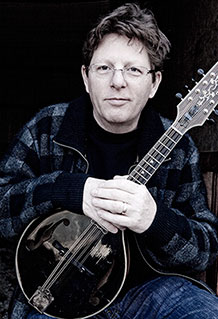 Darrell and I met in 1994 when we were scheduled by our publishers to write together. We wrote a song that day that I recorded. Later I got him to play on another CD and asked him to tour with me to UK. The original idea was for us to each do separate sets but we played a little more together each night until it was a duo after about three nights.
- Care to explain the humorous title of the album: We’re Usually Better Than This?
- It’s a line I used in the mc work on that live show. “How many of you have seen us before? How many are new to us? Those of you who have seen us before know we’re usually a lot better than this.”
- How would you compare this CD to your previous collaboration, Real Time?
- It’s even more spontaneous than that one. The first one was pretty seat of the pants though and we just picked songs as we went, starting with the freshest one that Darrell had written the night before. We interact well with little discussion. The live set was a reunion after about four years of laying fallow. We played songs we’d never played before and extended a lot of them with jamming.
- In addition to working with Darrell Scott, you contributed to your family project: O’Brien Party of 7. (Brilliant family band name, by the way). This CD is a tribute to the late, great Roger Miller. Were you all Roger Miller fans over the years?
- I was certainly a big fan. My sister Mollie and her husband Rich Moore too. My son Joel learned a bunch of his songs as a young kid. The rest of the kids picked their favorites and we all played and sang together.
- Many people only associate Roger Miller with his classic hits “King of the Road” and “Dang Me.” What do you feel he brought to Americana / country music?
- He was the perfect thing at the time, irreverent but safe, kinda like the Beatles, except he came out of country and western swing. He would have been grouped with the Outlaw thing ala Willy and Waylon except just after he gave up on Nashville his song “Dang Me” changed everything. Really his lyrics and his music broke the mold and nobody was the same after.
- How often does O’Brien Party of 7 get to perform together?
- We hardly ever get together, each of the seven live in separate states! But we have done a few festivals and tours around the release. It’s dormant right now.
- Tell us about your recent production work with Old Man Luedecke. How did he come into your musical radar? You must be pretty pleased that this CD Tender is the Night was nominated for a Juno Award. What is it about Old Man’s style and songwriting that attracted you to this project?
- Like Darrell Scott, Chris Luedecke traveled with me in the UK as opening act. We enjoyed each other’s company and he asked me to help on an earlier CD. Then he asked me to produce this one. His songs are a survey of his quirky mind and quick wit.
- What else is happening in your musical life?
- I’m doing lots of recording this year. I just finished another studio thing with Darrell Scott, and I’ve got three more projects waiting to do on my own and one to produce. One is a Hot Rize recording, our first studio thing since 1990! I’m definitely flushing the system. Lots of new songs coming and I’m pulling out older ones that never saw the light of day. Will be playing a few of them at Me and Thee.
Quick Q and A with Old Man Luedecke
Old Man Ludecke is a mighty fine banjo pickin musician. Hes an award-winning musician who resides way up yonder in Chester, Nova Scotia. He’s currently nominated for a Juno Award for his latest album, Tender is the Night. (The Juno is the equivalent of the Grammy Award in the United States, by the way.) Americana / bluegrass legend, Tim O’Brien produced this CD along with a crackerjack Nashville band and it’s receiving all kinds of kudos south of the (Canadian) border too. Read about Old Man’s musical influences, songwriting, and his foray into recording in Nashville. And check out this delightful video of “Little Stream of Whiskey.”
- You’ve described the banjo as an instrument that has a natural buoyancy. Because the tone of the banjo is so distinct and, for lack of a better word at the moment-so upbeat and perky — are you able to twist and turn various melodies into happy songs even when they’re actually far from that?
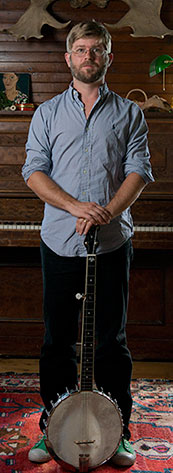 Most song lyrics I write are kind of sad and hopeful at the same time. I’m much inspired by the Carter Family and early American Folk music which often sounds happy but lyrically is pretty mournful.
- Has the banjo always been your instrument of choice? Or did you try your hand at another instrument before you settled on the banjo?
- For writing songs, banjo has always been my instrument of choice. I played piano and clarinet when I was younger. I played clarinet and banjo in a can can show in the Yukon for a time but as a total expression, I’ve found myself most clearly in oldtime banjo.
- Who were your early influences?
- I first found my way into singing in my own very natural voice after hearing Bascom Lunsford on the Harry Smith Anthology of American Folk Music.
- You’ve said that the Old Man moniker is a nickname that has been with you for a while.
- Indeed, I had a co-worker who saddled me with that when I was 22 (I’m now 37). i quit a bunch of jobs and have retirement cards my wife drew with the name long before she first drew it on a poster for a gig.
- Your latest album, Tender is the Night, was recorded in Nashville. Was this a first for you? Or were your other albums recorded there as well?
- First go there.
- Tell us about working with Tim O’Brien as the producer of your CD.
- We all played live and did the best we could. Tim’s is quite a bit better than mine. He has an easy going brilliance that I found comforting, awe inspiring and a bit of an ultimate foil to my songs.
- Do you feel that your writing has changed since you moved to a rural environment? If so, in what ways?
- Not sure any more, all my records have largely been written in rural environments. I’m a real city kid gone country. Most people are the other way round.
- What’s life like now that you’re the father of twin girls? Has the rhythm of your days at home changed since they were born?
- There’s a lot more oatmeal on my guitar. We’re expecting another baby in June! There’s a bit of wild rhythm now but it will likely be more syncopated for a while
- What’s next for you?
- I’d really like to make a perfect song, one of pure gifted magic, but there’s a lot of lesser magic yet to hammer away at making a space for it to come along into.
- Likely what’s next will involve more touring. I’m really excited to explore the United States which I know mostly from daydreams.
More Interviews
- Quick Q and A with Zoë Lewis
- Quick Q and A with Cormac McCarthy
- Quick Q and A with Three Tall Pines
- Quick Q and A with the Vespers
- Quick Q and A with Hayley Reardon
- Quick Q and A with Elana James (Hot Club of Cowtown)
- Quick Q and A with Jon Shain
- Quick Q and A with Tim O'Brien
- Quick Q and A with Old Man Luedecke
- Quick Q and A with Pat Wictor
- Quick Q and A with Greg Greenway
- Quick Q and A with Joe Jencks (Brother Sun)
- Quick Q and A with David Wilcox
- Quick Q and A with Connor Garvey
- Quick Q and A with Tracy Grammer
- Quick Q and A with Cliff Eberhardt
- Quick Q and A with Carey Murdock
- Quick Q and A with Ry Cavanaugh
- Quick Q and A with Patty Larkin
- Quick Q and A with Rollyn Zoubek (from Maeve)
- Quick Q and A with Jim Trick
- Quick Q and A with Vance Gilbert
- Quick Q and A with Patti DeRosa
- Quick Q and A with Scott Alarik
- Quick Q and A with Kevin May (Guggenheim Grotto)
- Quick Q and A with Jenee Halstead
- Quick Q and A with Ward Hayden
- Quick Q and A with Robby Hecht
- Quick Q and A with Garnet Rogers
- Quick Q and A with Linda Sharar
- Quick Q and A with Christine Lavin
- Quick Q and A with Don White
- Quick Q and A with Mike Katz (Battlefield Band)
- Quick Q and A with Kym Warner (The Greencards)
- Quick Q and A with Jimmy Ryan
- Quick Q and A with Buskin and Batteau
- Quick Q and A with Beggar's Ride
- Quick Q and A with Ellis Paul
- Quick Q and A with Peyton Tochterman
- Quick Q and A with Peter Mulvey
- Quick Q and A with Ethan Scott Baird (Pesky J. Nixon)
- Quick Q and A with Erin McKeown
- Quick Q and A with Barnaby Bright
- Quick Q and A with Mason Daring and Jeanie Stahl
- Quick Q and A with Addy and Julia
- Quick Q and A with Jonathan Edwards
- Great new Carter Family documentary in the works
- Quick Q and A with Kat Quinn
- Quick Q and A with Nora Jane Struthers
- Q and A with Kris Delmhorst
- The Parkington Sisters, Heather Maloney, 21 Oct. 2011
- FOLK a feature-length documentary
- Quick Q and A with Marshall Crenshaw
- Quick Q and A with Chelsea Berry, November 2011
- Quick Q and A with David Mallett
- Quick Q and A with Laura Bullock
- Quick Q and A with Greg Trooper
- Quick Q and A with Cindy Bullens, October 2011
- Quick Q and A with Hayley Reardon, October 2011
- Quick Q and A with Ariel Parkington (Parkington Sisters)
- Quick Q and A with Heather Maloney
- Quick Q and A with Seth Glier, Sept. 2011
- Quick Q and A with Liz Longley
- Quick Q and A with Cris Williamson
- Quick Q and A with Brian Gundersdorf (We’re About 9)
- Quick Q and A with Joziah Longo and Tink Lloyd
- Grammy-award winning songwriter Jay Ungar presents workshop for local student musicians
- Quick Q and A with Kate Taylor, September 2011
- Quick Q and A with Sarah Blacker
- Quick Q and A with Jay Ungar, September 2011
- Q and A with Eliot Bronson
- T Max reviews our Anais Mitchell and the Hadestown Orchestra show
- Quick Q and A with Kevin May (The Guggenheim Grotto)
- Quick Q and A with Eva (Hot Club of Cowtown canine star)
- Quick Q and A with David Wilcox
- Quick Q and A with Carrie and Fuzz from Caravan of Thieves
- Quick Q and A with John Price (Jubilee Mule)
- Quick Q and A with Aoife Clancy
- Quick Q and A with Eric McDonald (Matching Orange)
- Quick Q and A with Adam Ezra
- Quick Q and A with Mary Gauthier
- Quick Q and A with Jason Myles Goss
- Quick Q and A with Nancy Josephson (Angel Band)
- Quick Q and A with Hayley Reardon
- Quick Q and A with Chelsea Berry
- Quick Q and A with Jesse Milnes from The Sweetback Sisters
- Quick Q and A with Jim Lauderdale
- Quick Q and A with Carrie Rodriguez
- Quick Q and A with Eliza Gilkyson (Oct. 2010)
- Quick Q and A with Slaid Cleaves
- Quick Q and A with Garnet Rogers
- Quick Q and A with Tim O’Brien (2010)
- Quick Q and A with Dinty Child (Session Americana)
- Quick Q and A with Brittany Ann Tranbaugh
- Quick Q and W with Amy Petty
- Quick Q and A with Reed Waddle
- Quick Q and A with Joe Iadanza
- Quick Q and A with Josh Lamkin (The Brilliant Inventions)
- Quick Q and A with John Gorka
- Quick Q and A with Anne Heaton
